![[Bitte in "English" übersetzen:] Sede de PohlCon en Alemania con instalaciones industriales y edificio corporativo](/fileadmin/_processed_/b/1/csm_00.PohlCon_Hero_8319f25350.png)
Cable tray manufacturers: criteria for choosing a technical supplier
Choosing between different cable tray manufacturers should not depend only on price or the immediate availability of a reference. In industrial projects, infrastructure, technical facilities, tunnels, tertiary buildings or installations with high electrical requirements, the selected manufacturer can affect the safety, maintenance, durability and ease of integration of the entire system.
A cable tray does not work as an isolated product. It is part of a complete solution for routing, supporting and protecting cabling. For this reason, before selecting a supplier, it is advisable to assess its experience, manufacturing capacity, technical documentation, regulatory compliance, stock availability and ability to adapt to project-specific requirements.
In this article, we review the main criteria for evaluating cable tray manufacturers and cable tray suppliers from a practical perspective for engineering firms, installers, distributors and technical decision-makers.

Why choosing the right cable tray manufacturer affects the entire project
The choice of manufacturer directly influences project execution. A poorly selected tray can generate cost overruns, maintenance problems, incompatibilities with other systems or a shorter service life than expected.
In an industrial electrical installation, the cable support system must perform several functions at once. It must support the weight of the cables, facilitate the distribution of power or data lines, protect cables from the environment, allow future inspections and adapt to extensions or route changes.
When the project is developed in an industrial building, a tunnel, a logistics center, an energy plant, an airport or critical infrastructure, these requirements become more demanding. Standard trays are not enough. The solution must fit the environment, load, support spacing, cable type, exposure to humidity or corrosion, ventilation needs and safety requirements.
This is why working with cable tray manufacturers with technical experience provides a clear advantage. The manufacturer is not limited to supplying a product reference. It can help define which system makes the most sense, which finish is suitable, which accessories are required and which documentation should accompany the product.
This difference matters because many on-site problems appear when the system has been decided too late. Saturated routes, insufficient supports, improvised bends, limited room for future expansion or incompatibility between parts are common situations when the choice is reduced to buying the tray that is most readily available.
By contrast, a decision planned from the start helps improve safety, reduce rework and facilitate maintenance throughout the service life of the installation.
Manufacturers, suppliers and distributors do not play the same role
Terms such as cable tray manufacturer, cable tray supplier or electrical material distributor are often used in the market. Although they are related, they do not always play the same role within the project.
A manufacturer designs, produces or directly controls the manufacture of the system. This gives it knowledge of the product’s technical behavior, load limits, finishes, compatible accessories and recommended installation conditions.
A supplier can act as the supply point, whether it is the manufacturer, a specialized distributor or a company that integrates different solutions into its catalogue. Its value depends on its real ability to deliver products, provide documentation, offer technical advice and resolve incidents.
A distributor plays a key role in the value chain. It provides proximity, territorial reach, logistics management and material availability for installers or companies that need a fast response. In many projects, collaboration between manufacturer and distributor combines specialized technical support with local supply.
The right question is not only who sells cable trays. The useful question is what capacity that supplier has to help the installation work properly.
A good supplier should be able to answer questions such as these:
- Which type of system best fits the environment.
- What load the installation must support.
- Which support spacing is recommended.
- Which surface finish is suitable according to exposure and corrosion.
- Which accessories are compatible with each product family.
- Which technical documentation can be provided for specification.
- What availability exists for projects with tight deadlines.
- What support can be provided before, during and after installation.
- What capacity it has to adapt the solution to specific requirements.
This approach avoids a decision based only on the catalogue and brings the selection closer to the real criteria of a construction project.
What a cable support system manufacturer should offer
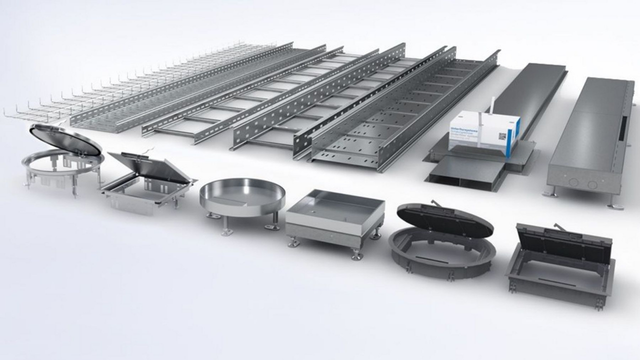
A cable support system manufacturer should offer more than loose trays. In professional projects, the solution usually requires trays, supports, joints, covers, dividers, bends, branches, fasteners and accessories that are compatible with one another.
This system-based approach is essential because an installation is not solved with straight sections alone. Routes must overcome obstacles, change direction, adapt to existing structures, separate services, allow future extensions and maintain accessibility for future inspections.
The product range is a relevant criterion because it makes it possible to adapt the solution to different conditions of load, ventilation, protection, routing and maintenance. For more detail on materials, types and product selection criteria, you can consult our article on metal cable trays.
A technical manufacturer should be able to work with different solutions, such as mesh trays, perforated trays, solid-bottom trays, ladder trays, self-supporting systems, supports, fasteners and accessories. This breadth makes it possible to adapt the installation to factors such as load, ventilation, protection, routing, environment and maintenance.
It is also important that the manufacturer can provide specific solutions when the project requires them. In industrial installations, infrastructure or technical buildings, not all routes can be solved with standard references. There may be height, structure, load, accessibility or interference constraints with other services, or a need to integrate with existing systems.
For this reason, custom cable tray production or the development of adapted solutions is a high-value criterion. It makes it possible to respond to specific situations without depending on improvised on-site adaptations and improves the technical consistency of the final system.
Technical criteria for evaluating cable tray manufacturers
The evaluation of cable tray manufacturers should be based on verifiable criteria. It is not only about comparing catalogues, but about checking whether the manufacturer can respond to the real conditions of the project.
Load capacity and support spacing
Load is one of the most important factors. Each tray must support the expected cable weight, the margin for future expansion and the installation conditions. At this point, it is advisable to review data such as distributed load, support spacing, allowable deflection and the behavior of the system with different widths or heights.
A technical manufacturer should provide tables, diagrams or documentation that help interpret these values. This is especially relevant for ladder trays, self-supporting trays or routes with power cables.
Type of environment and corrosion resistance
Not all installations operate under the same conditions. A dry indoor environment, a humid industrial building, an aggressive industrial atmosphere, an outdoor area, a marine environment or an installation with chemical agents require different decisions.
The surface finish should be selected according to the environment. In many indoor installations, continuous galvanizing may be sufficient. Outdoors or in more demanding environments, it may be necessary to consider hot-dip galvanizing or stainless steel.
Here, the manufacturer’s role is to help avoid generic decisions. The choice of material and finish has a direct impact on durability, maintenance and the total cost of the installation.
Ventilation, protection and maintenance
Cabling generates heat and needs accessible routes for inspection. In installations with high cable density, high power or technical rooms, ventilation in the cable support system can influence the thermal behaviour of the whole installation.
At the same time, certain environments require greater protection against dust, dirt, impacts, splashes or falling particles. This means the choice must balance ventilation, mechanical protection, the environment and ease of maintenance.
A manufacturer with technical judgement can help define that combination from the beginning, avoiding decisions based only on availability or price.
Compatibility between trays, supports and accessories
Compatibility prevents incidents. When trays, supports, covers, joints and fasteners belong to a coherent system, installation errors and on-site adaptations are reduced.
A manufacturer with a complete range can provide a more controlled solution. This improves installation accuracy and facilitates the project’s technical documentation.
Capacity for special solutions
On site, real conditions are rarely perfect. There may be existing structures, complex routes, height limitations, high loads, interference with HVAC systems, already saturated routes or specific maintenance requirements.
In these cases, working with a manufacturer makes it possible to study adapted solutions. This capacity is especially important in industrial projects, tunnels, energy installations, automotive facilities, logistics centres or infrastructure where operational continuity and safety carry significant weight.
Cable tray suppliers and technical support during the project
The term cable tray suppliers are useful because it reflects how buyers often search. They are not always looking only for a factory. They are also looking for a company capable of supplying, advising, documenting and responding.
In professional projects, the supplier must act as technical support. This begins before the purchase, when routes, loads, materials and protection needs are still being defined. At this stage, a technical review can prevent sizing errors or incompatibilities.
During the project, there was also support. Route changes, interference with other installations, partial delivery needs, support adjustments or questions about accessories may arise. A supplier with technical knowledge can help resolve these situations more quickly.
After installation, documentation and traceability remain important. Maintenance, extensions and technical audits require clear information about the installed system.
Therefore, a good supplier should not be limited to sending a list of references. It should be able to provide:
- Updated technical catalogues.
- Product data sheets.
- Load data.
- Information on materials and finishes.
- Accessory compatibility.
- Installation recommendations.
- Documentation for specification.
- Technical support to resolve project questions.
- Logistics capacity and stock when timing is critical.
- Capacity to study custom solutions.
This approach is especially relevant for engineering firms, installers and distributors that need to reduce uncertainty in complex projects.
Experience, history and industrial capacity of the manufacturer
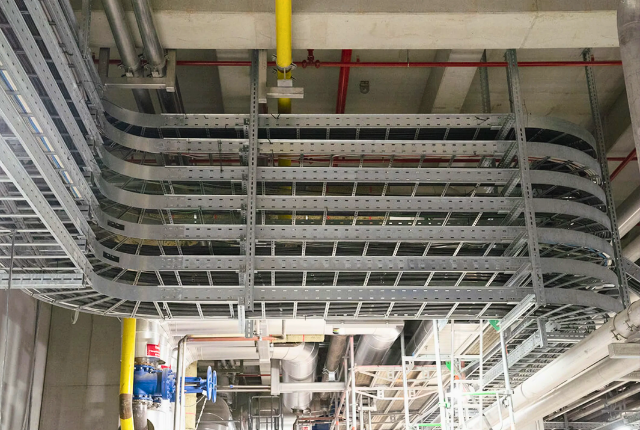
The manufacturer’s experience is a factor worth evaluating. It is not only about age, but about accumulated knowledge in real projects, demanding sectors and diverse installation conditions.
PohlCon GmbH brings together a consolidated industrial track record in Europe. The Group integrates brands specialized in cable support systems, construction structures and fastening solutions, with a technical base developed over decades.
In Spain, activity linked to cable support systems began in 1992, first with the PUK Portacables subsidiary and now under PohlCon Ibérica. This evolution combines local knowledge of the Iberian market with the industrial capacity of a specialized German group.
The history of the Spanish subsidiary is closely linked to highly demanding projects. In the Pajares tunnel, for the high-speed railway line, 37,000 meters of tray and 20,000 supports were supplied. In the Coll de Lilla tunnel, PohlCon Ibérica participated with wide-span trays and supports for fixing the tunnel lighting system.
Internationally, the PohlCon Group has also participated in large-scale infrastructure and industrial projects. In the City S-Bahn S21, at Berlin Central Station, PohlCon supplied and installed almost 16,000 cable ducts for construction phase 1. At Palm Paper Factory in Aalen, approximately 56 km of cable trays, 5 km of vertical ladders, more than 11,000 supports, 29 km of profile supports and almost 10,000 head plates were installed, as well as formed parts and floor and underfloor systems.
These examples help explain what it means to work with a specialized manufacturer. It is not only about having products available, but about having the capacity to respond to projects with large volumes, technical requirements, logistics coordination and high reliability standards.
In practice, this track record adds value in several project phases:
- System design from the early stages.
- Product selection according to environment and load.
- Route optimization.
- Compatibility between trays, supports and accessories.
- Adaptation to specific requirements.
- Coordination with distributors, installers and engineering firms.
- Technical documentation for specification and execution.
When the manufacturer understands the reality of the construction site, the final solution is usually safer, easier to maintain and easier to install.
Manufacturing in Germany, technical control and custom production
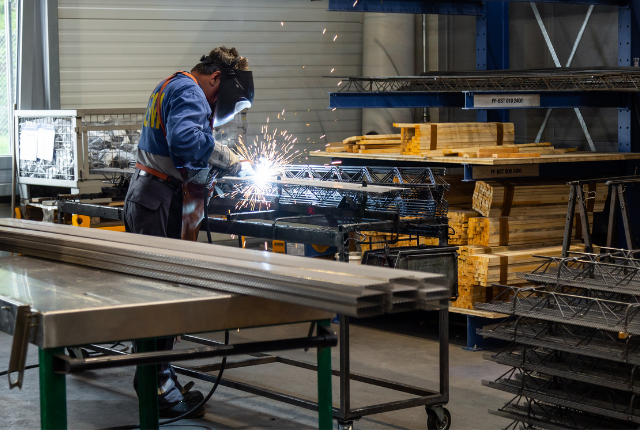
One of the most relevant criteria when comparing cable tray manufacturers is real manufacturing capacity. In PohlCon’s case, production remains in Germany, with plants in Berlin and Schönecken, where cable support systems and underfloor components are manufactured.
This industrial capacity makes it possible to better control quality, traceability and the availability of solutions for technical projects. It also facilitates the development of products adapted to specific conditions when an installation cannot be solved with standard references alone.
In-house manufacturing provides clear advantages:
- Greater control over materials, finishes and processes.
- Better product traceability.
- Capacity to work on special solutions.
- Greater consistency between trays, supports and accessories.
- More reliable technical documentation.
- Possibility to optimize the system from the design stage.
- Technical response for highly demanding projects.
In industrial projects, this capacity can make a difference. An installation may require special dimensions, greater strength, adaptation to an existing structure, compatibility with specific supports or solutions prepared for demanding environmental conditions.
As manufacturers, we can study custom production and specific solutions according to the needs of the project. This helps avoid improvised on-site adaptations and allows work with a more controlled technical solution from the beginning.
Technical documentation, standards and traceability
Technical documentation is one of the elements that most clearly differentiates professional manufacturers. In an electrical installation, every decision should be justifiable with data.
Industrial cable trays must be assessable based on aspects such as load, mechanical strength, electrical continuity, corrosion resistance, fire behavior where applicable, accessory compatibility and installation conditions.
In Europe, the UNE-EN 61537 standard is a key reference for cable tray systems and cable ladder systems. It is not enough to mention regulatory compliance in generic terms. Clear information is needed on which products comply, under what conditions and with what supporting documentation.
Traceability also provides confidence. Knowing which product has been installed, with which finish, which accessories have been used, and which documentation supports it facilitates project management and subsequent maintenance.
In engineering projects, documentation must be useful for several profiles. The specifier needs clear data for specification. The installer needs practical installation information. The distributor needs to identify references and availability. The maintenance manager needs to understand the system that will be handed over once the project is complete.
A manufacturer that organizes this information well reduces friction throughout the chain.
Stock, logistics and response capacity
On site, timing affects many decisions. A technically suitable system can create problems if it does not arrive on time, if there is no continuity of supply or if the necessary accessories are not available.
For this reason, when evaluating cable tray manufacturers, it is also advisable to review their logistics capacity. This includes stock availability, delivery times, coordination with distributors, response to partial orders and capacity to serve high-volume projects.
Logistics is not a secondary detail. A delay in trays, supports or accessories can affect other trades, block installation phases and generate indirect costs.
PohlCon Ibérica has its headquarters in Abrera, in a strategic location within Barcelona’s industrial environment. This proximity facilitates coordination with customers, distributors and installers in Spain, Portugal and Italy, and strengthens response capacity in projects that require technical monitoring and reliable supply.
The criterion should not only be who can deliver a specific reference first. The more complete question is who can maintain a reliable response throughout the entire project.
Initial cost and total installation cost
Comparing only the unit price of a tray can lead to inefficient decisions. In industrial projects, the real cost should be analyzed from the perspective of the total cost of the installation.
A cheaper tray can end up being more expensive if its durability is lower, if it needs to be replaced earlier, if it offers poorer corrosion resistance or if it requires more maintenance interventions throughout its service life. Likewise, a higher-quality solution can reduce incidents and extend the long-term performance of the system.
At PohlCon, the product approach is based on quality, resistance and long service life. This vision is especially important in installations where cabling is part of critical processes, transport infrastructure, technical buildings or industrial environments where a later intervention can involve downtime, indirect costs or safety problems.
Total cost includes factors such as:
- Durability of the finish.
- Mechanical strength of the system.
- Expected maintenance.
- Adaptability to future extensions.
- Risk of premature replacement.
- Compatibility with the existing structure.
- Documentation and technical support.
- Reliability of supply during the project.
Therefore, supplier evaluation should combine price, performance, durability and technical support. In many cases, the right manufacturer helps optimize costs from the design stage, avoiding unnecessary oversizing or solutions that later prove insufficient.
Preguntas clave antes de elegir fabricante o proveedor
Antes de seleccionar un fabricante o proveedor, es recomendable trabajar con una lista de comprobación técnica. Esta metodología ayuda a comparar opciones de forma objetiva y reduce el riesgo de elegir solo por disponibilidad o precio.
Preguntas sobre el proyecto
- Qué tipo de instalación se va a ejecutar.
- Qué cables se van a conducir.
- Qué peso tendrá el cableado actual y futuro.
- Qué margen de ampliación se debe prever.
- Qué distancia habrá entre apoyos.
- Qué exposición ambiental tendrá el sistema.
- Qué necesidades de ventilación existen.
- Qué requisitos de protección mecánica o contra agentes externos se deben cumplir.
- Qué condicionantes de estructura, altura o recorrido pueden afectar al montaje.
Preguntas sobre el producto
- Qué familias de sistemas portacables ofrece el fabricante.
- Qué materiales y acabados están disponibles.
- Qué accesorios forman parte del sistema.
- Qué datos de carga se pueden consultar.
- Qué documentación normativa acompaña al producto.
- Qué soluciones existen para curvas, derivaciones, tapas, separadores y fijaciones.
- Qué referencias están disponibles en stock.
- Qué opciones existen para soluciones especiales o producción a medida.
Preguntas sobre el soporte técnico
- El fabricante puede revisar planos o recorridos.
- Puede asesorar sobre tipo de sistema y acabado.
- Puede ayudar a optimizar cantidades y accesorios.
- Puede aportar documentación para prescripción.
- Puede responder durante la ejecución de obra.
- Puede colaborar con distribuidores o instaladores.
- Puede estudiar una solución específica si el proyecto no encaja con referencias estándar.
Estas preguntas ayudan a diferenciar un proveedor meramente comercial de un partner técnico.
Why PohlCon Ibérica can add value to cable tray projects
At PohlCon Ibérica, we work with a system-based approach. Our experience as manufacturers of cable support systems, underfloor systems, clamps, supports and fastening solutions allows us to support engineering firms, installers, construction companies and distributors at different project stages.
PohlCon’s range includes solutions for routing, supporting and protecting cabling in industrial installations, technical buildings, infrastructure, energy, tunnels and highly demanding projects. This breadth makes it possible to adapt the solution to the environment, load, ventilation, maintenance and specific conditions of each installation.
Technical support is also a central part of our proposal. We do not understand the cable tray as an isolated reference, but as an element that must be correctly integrated into the electrical infrastructure of the building, industrial facility or construction project.
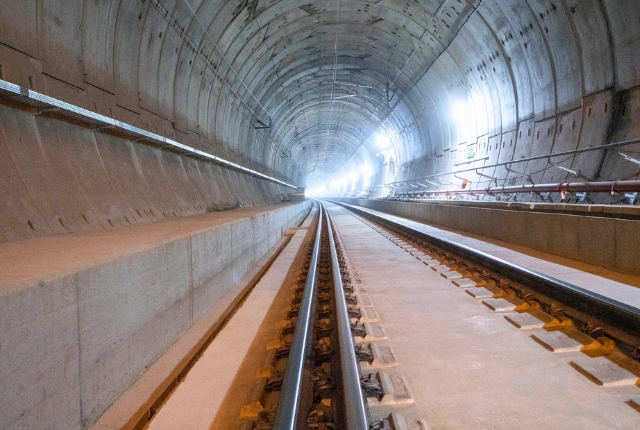
The trust of companies and projects such as SEAT, Airport Frankfurt, City S-Bahn S21 at Berlin Central Station, the Pajares tunnel and the Coll de Lilla tunnel reinforce a key idea: reliability depends not only on the product, but also on the technical knowledge, supply capacity and service that support each installation.
In industrial projects, technical facilities, tunnels, infrastructure or buildings with high requirements, this way of working helps reduce errors, improve planning and facilitate execution.
Our team can advise on the most suitable system, review support requirements, help define accessories, study custom solutions and provide technical documentation so that the decision is supported from the design stage.
What to review before requesting a quotation
Before requesting a quotation from a cable tray manufacturer or supplier, it is advisable to gather basic project information. This allows for a more accurate response and avoids comparisons that are not useful.
The minimum recommended information includes:
- Type of installation.
- Sector or application.
- Approximate route length.
- Type and estimated weight of the cable.
- Future expansion needs.
- Environmental conditions.
- Indicative tray height and width.
- Need for covers, dividers or accessories.
- Planned support type.
- Delivery deadlines.
- Required documentation.
- Special manufacturing or adaptation needs.
The clearer this information is, the easier it will be to select a suitable solution. It will also be easier to compare proposals between different manufacturers or suppliers.
In projects where not all data has yet been defined, technical support can help guide the initial decision. This is especially useful when there are doubts about loads, routes, finishes, supports, accessories or environmental conditions.
Choosing a manufacturer is also a reliability decision
Selecting cable tray manufacturers is a decision that affects the design, installation, maintenance and service life of the electrical system. The right tray does not depend only on the model, but on the set of criteria behind it: experience, manufacturing, load, environment, standards, accessories, technical support, stock and response capacity.
For an engineering firm, installer or distributor, working with a specialized manufacturer makes it possible to make safer decisions and reduce uncertainty on site. For the end customer, it results in an installation that is better organized, easier to maintain and prepared for future needs.
If you are evaluating different cable tray suppliers for an industrial, technical or infrastructure project, the PohlCon Ibérica team can help you review the needs of the installation and select the most suitable cable support system.
Frequently asked questions about cable tray manufacturers
What is the difference between a cable tray manufacturer and a cable tray supplier?
A manufacturer controls the design, production or technical specification of the system. A supplier can be the manufacturer, a distributor or a supply company. What matters is that it can provide product, documentation, technical advice and logistics response.
What should a good cable tray manufacturer offer?
It should have experience, a technical range, verifiable data, regulatory documentation, compatible accessories, supply capacity, technical support and the ability to adapt solutions to the project’s specific requirements.
Why is it important for the manufacturer to have custom production capacity?
Because not all installations can be solved with standard references. In industrial or infrastructure projects, there may be special loads, complex routes, structural limitations or specific installation requirements. Custom production helps solve these constraints with greater technical control.
What documentation should a cable tray manufacturer provide?
It should provide technical catalogues, product data sheets, load data, information on materials and finishes, accessory compatibility, installation recommendations and documentation linked to regulatory compliance.
How should cable tray suppliers be compared?
The comparison should include price, experience, range, availability, load data, finishes, accessories, technical support, delivery times, documentation, logistics capacity and experience in similar projects.